
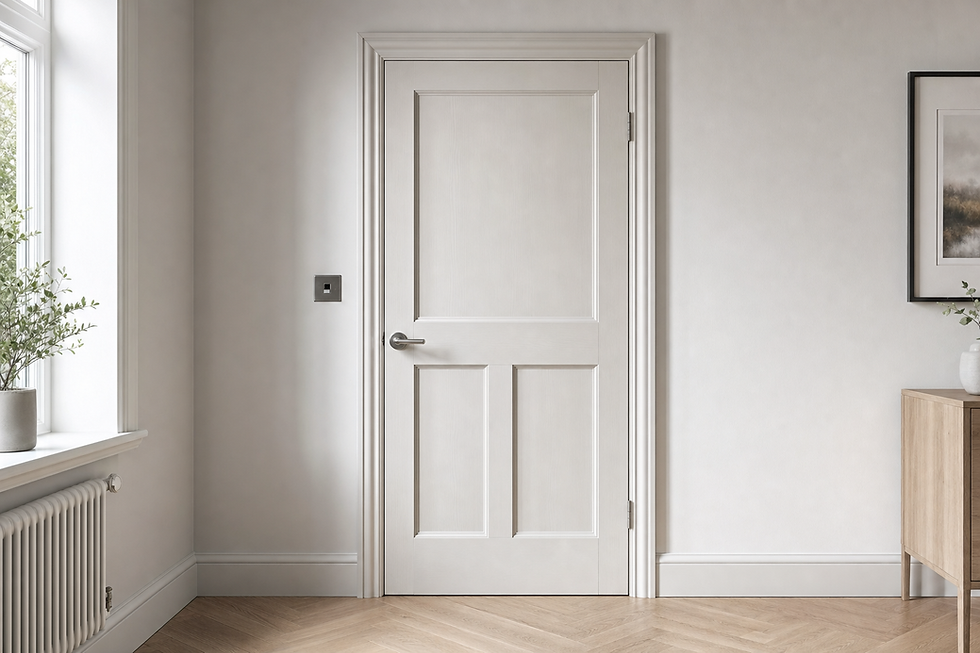
Why neat joinery changes the feel of a room
Accurate joints and margins
Clean lines and consistent gaps help fitted timber look right and behave properly day to day.
Linked to wider projects
Joinery can be timed with plastering, flooring and kitchens so the fit stays clean across the room.
Smooth operation matters
Doors, linings and fitted pieces should open, close and sit as though they were meant to.
The details you touch every single day
Good carpentry is often the part of a room you notice most once you start using it. Doors should shut properly, skirting should sit cleanly, linings should make sense and fitted features should feel like they belong there rather than having been persuaded into place. We carry out carpentry and joinery work at Trojan Construction across first-fix and second-fix tasks, including structural timber elements, doors, linings, skirting, architraves and other fitted interior details. Accuracy matters here because small errors tend to announce themselves loudly every time something sticks, rattles or sits crooked.

Fit, finish and sequence all matter
Measurement, timber choice, hardware, profiles and the condition of adjoining surfaces all affect how well joinery fits and how long it lasts. Timing also matters at Trojan Construction, especially during renovations where carpentry has to work alongside plastering, flooring, kitchens and decoration. We plan that order carefully so clean joints, consistent margins and smooth operation are not left battling poor preparation from earlier stages. The goal is not flashy joinery language. It is simple, practical results that work cleanly now and remain easy to live with once the room is back in use.
Frequently asked questions
What is the difference between first-fix and second-fix work?
First-fix covers structural timber and the earlier construction stage, while second-fix covers the visible joinery details such as doors, trims and finishing pieces. Both need accuracy, but they happen at different points in the build or renovation sequence.
What affects how well joinery fits?
Measurement, timber selection, hardware, profiles and the condition of surrounding walls and floors all play a part. Even well-made joinery can look poor if it is forced against uneven backgrounds, which is why preparation and sequencing matter so much.
Can joinery be included in a wider renovation?
Yes. Carpentry often needs to work alongside plastering, flooring, kitchens and decoration, so it makes sense to plan it as part of the wider room or home project. That helps produce cleaner junctions and a more coherent final finish.